APES · Topic 5.12 Sustainability

What does sustainable actually mean?

Many companies advertise their products as sustainable — but what does that actually mean scientifically?
Your name *required
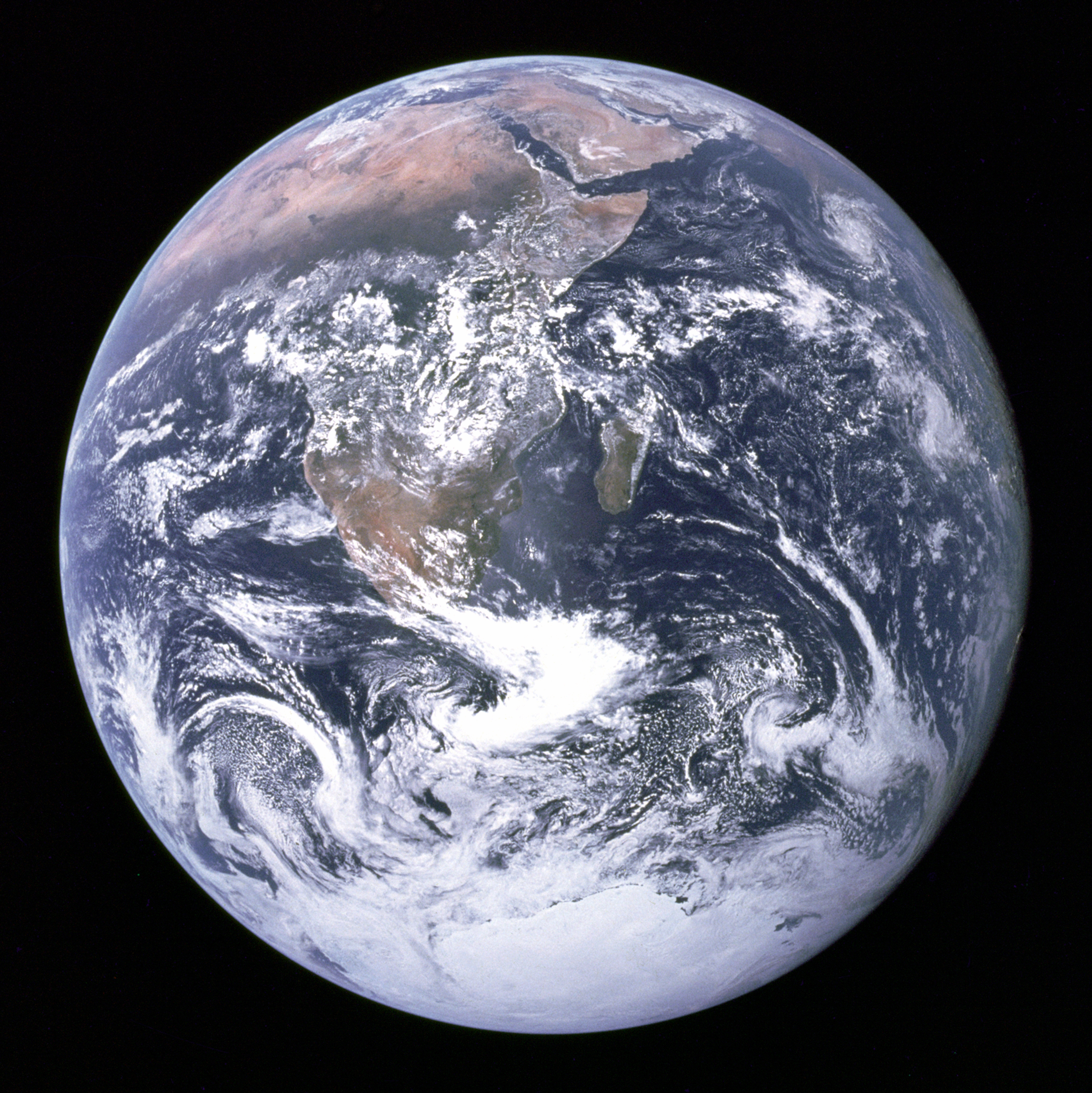
Earth seen from Apollo 17
NASA / Apollo 17 crew · Public domain · Wikimedia Commons

Products often labeled "sustainable"

Sustainable Clothing Sustainable Agriculture Sustainable Packaging Sustainable Seafood Sustainable Energy
These are your prior knowledge questions — there's no wrong answer yet. Write what you genuinely think. You'll revisit these ideas after learning the science. Consider: does a product being labeled "sustainable" mean it actually meets any scientific standard? What would that standard even look like?
In your own words: what do you think sustainability means? Is everything labeled "sustainable" actually sustainable?

Think about the word itself — what does it mean to "sustain" something? Consider a few of the examples above and whether they seem truly sustainable or just marketed that way.

✦ Feedback
How do you think scientists could determine whether something is truly sustainable?

Think about what kind of data or measurements might be needed. What would a scientist need to measure or compare over time to know if a resource is being used sustainably?

✦ Feedback

The Science of Sustainability

Building your framework for understanding how Earth's systems stay in balance — or don't.

What Is Sustainability?

Sustainability means humans live on Earth in a way that does not deplete resources for future generations. It requires using Earth's resources without consuming them faster than they can be replenished.

Resource Use ≤ Resource Regeneration
The fundamental principle of sustainability

When this balance tips — when we use resources faster than they can regenerate — a system becomes unsustainable. Sustainability has three pillars:

🌿 Environmental

Maintaining healthy ecosystems, biodiversity, clean air and water for future generations.

💰 Economic

Using resources in ways that don't destroy the natural systems economies depend on.

👥 Social

Meeting human needs equitably — today and for future generations — without exploitation.
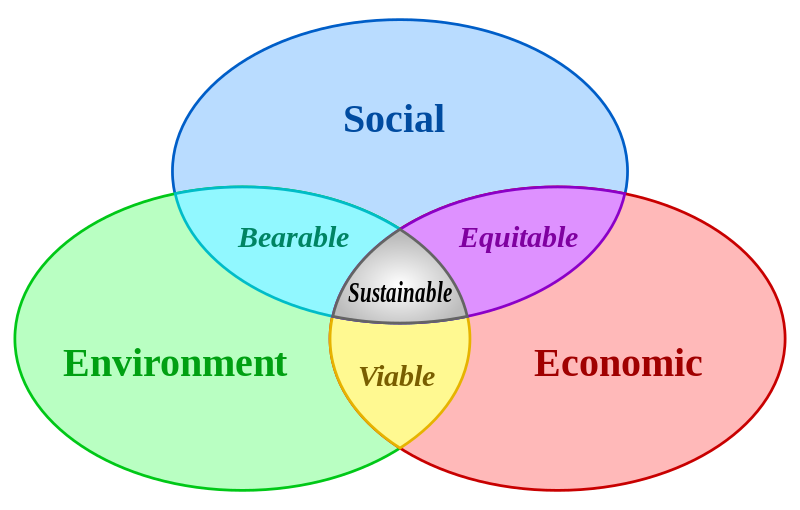
Sustainable development Venn diagram showing environment, economy and society
CC BY-SA

Sustainable development sits at the intersection of environmental, social, and economic systems. Wikimedia Commons

Sustainable vs. Unsustainable Resources

A resource is sustainable when it can regenerate as fast as it is used. The key test: can this resource be replenished at the same rate we consume it?

✓ Sustainable Example

Compost fertilizer — made from decomposed organic matter. Continuously replenished by natural cycles. The resource regenerates as fast as it is used.

✗ Unsustainable Example

Synthetic fertilizer — produced using fossil fuels. Fossil fuels are finite; they cannot regenerate on human timescales. Eventually they will run out.

💡 The AP Test for Sustainability: Ask yourself — can this resource be replenished as fast as it is used? If yes → sustainable. If no → unsustainable. This test applies to forests, fish, water, soil, and energy sources.
Key AP Concepts in This Topic

These are the core ideas you'll need to master for Topic 5.12 and the AP exam. Click each tag to see its definition:

Sustainability Maximum Sustainable Yield Environmental Indicators Ecological Footprint Exponential Population Growth Greenhouse Effect Biodiversity Loss Resource Depletion

Maximum Sustainable Yield

Simulate harvesting a renewable resource over 5 rounds. Your goal: harvest as much as possible without collapsing the population.

Atlantic cod fish
PD

Atlantic cod (Gadus morhua) — the species at the center of the Grand Banks collapse. Wikimedia Commons · NOAA, public domain

Grand Banks cod catch history graph
CC BY-SA

Grand Banks cod catch 1851–2009, showing the population collapse. Wikimedia Commons

How MSY Works

Maximum Sustainable Yield (MSY) is the largest harvest that can occur without permanently reducing the population. It occurs near 50% of carrying capacity — where population growth rate is highest.

Each round: the population regrows by 50% of whatever remains after your harvest. If you harvest too aggressively, regrowth slows and the population crashes.

🌿 Resource Population

CURRENT ROUND 1 / 5
POPULATION 20
TOTAL HARVESTED 0
CARRYING CAPACITY 40

📊 Population Over Time

▶ Simulation ready. Starting population: 20. Carrying capacity: 40.

Environmental Indicators

Environmental indicators are measurements used to assess ecosystem health and sustainability. Explore all five indicators below.
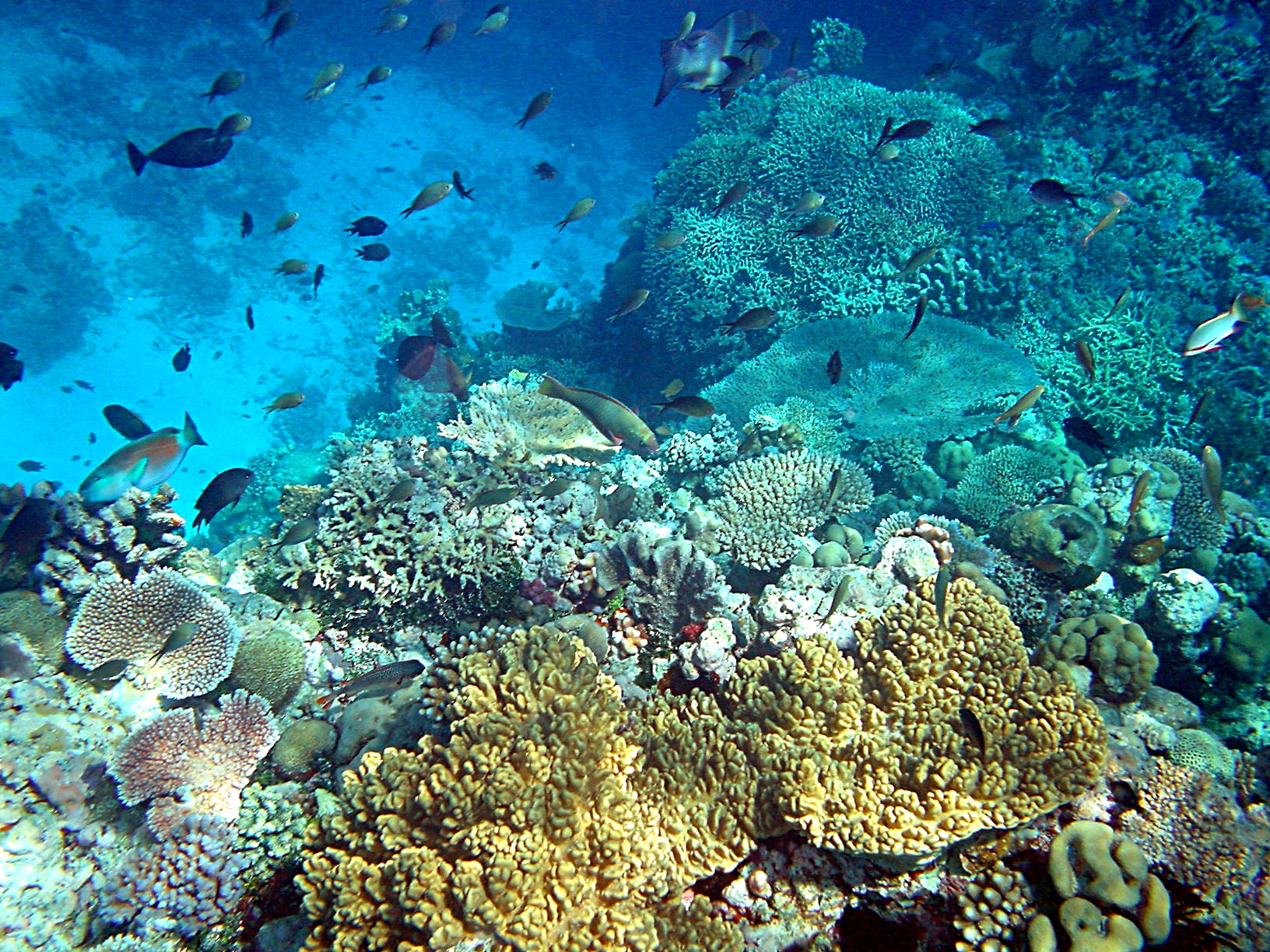
Coral reef ecosystem with diverse marine life, Papua New Guinea
⊕ Click to zoom
Coral reefs in Papua New Guinea — one of Earth's most biodiverse ecosystems. CC BY-SA · Wikimedia Commons
Indicator 1 — Biodiversity

Biodiversity includes genetic diversity, species diversity, and ecosystem diversity. High biodiversity indicates stable, resilient ecosystems with complex food webs.

⚠ Human activity is currently causing species extinction at a rate estimated to be 100–1,000× the natural background rate — a clear sign of unsustainable practices.
Coral reef at Palmyra Atoll showing biodiversity
PD

Coral reef at Palmyra Atoll, a model of high biodiversity. Wikimedia Commons · U.S. Fish & Wildlife Service, public domain
High Biodiversity Signals
Stable ecosystems · Resilient populations · Complex food webs · Healthy habitats
Low Biodiversity Signals
Pollution stress · Habitat destruction · Climate change impacts · Invasive species
Background Extinction Rate
Natural rate of ~1–5 species lost per year globally across all groups.
Current Extinction Rate
Dramatically elevated due to deforestation, habitat fragmentation, pollution, and climate change.
💬 Why is global extinction rate considered an indicator of unsustainability?
💡 Answer tip: A strong response mentions (1) what the natural background extinction rate is (~1–5 species/year globally), (2) that current rates are 100–1,000× higher, and (3) names at least one human cause (habitat destruction, pollution, climate change) that connects this to unsustainable activity.
✦ Feedback
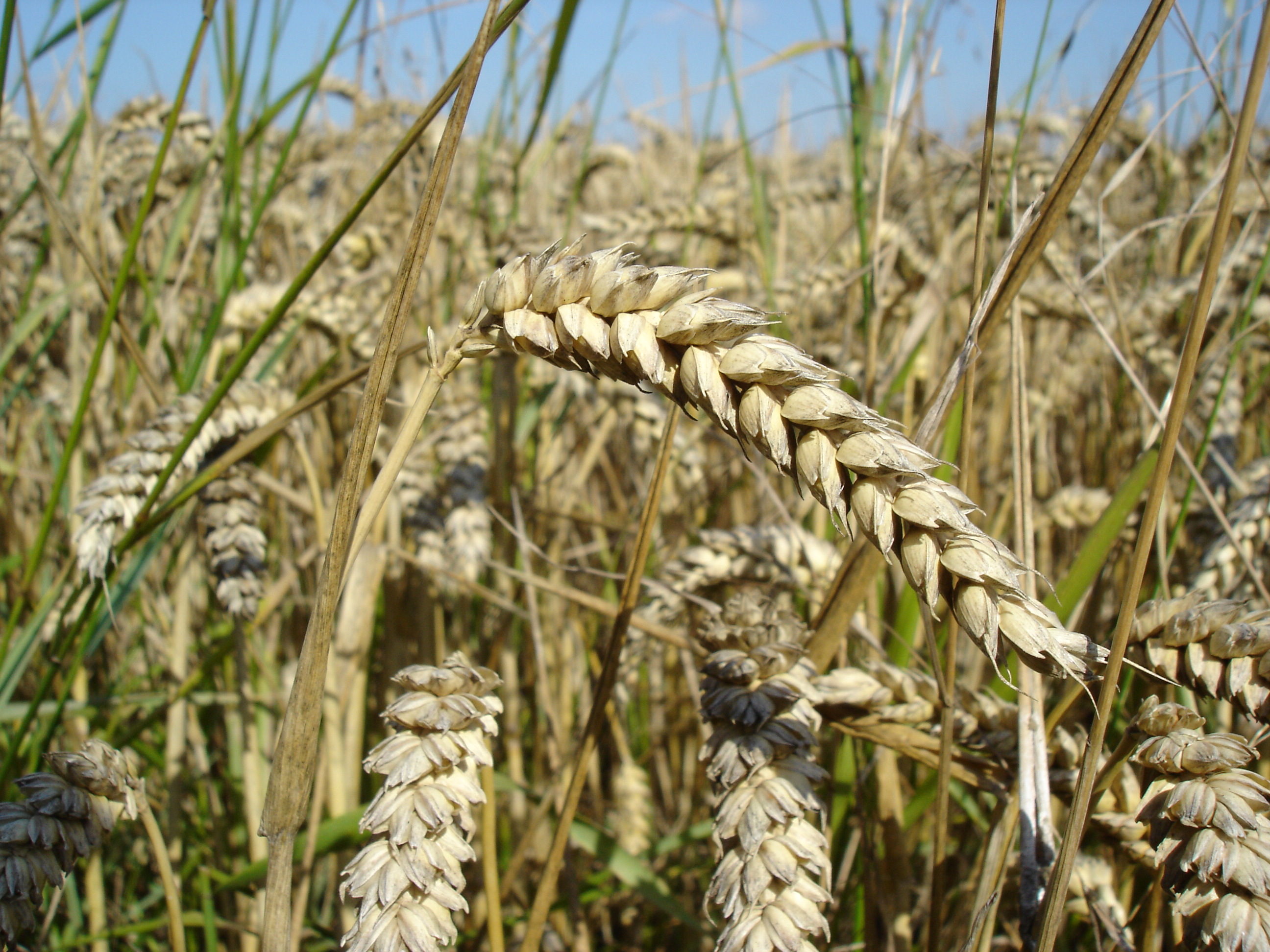
Close-up of wheat grain stalks in an agricultural field
⊕ Click to zoom
Wheat close-up — global grain production per capita peaked in the late 1980s. CC BY-SA · Wikimedia Commons
Indicator 2 — Food Production

Food production reflects Earth's capacity to support agriculture. It depends on soil health, water availability, and climate stability. When food production trends downward per capita, it signals unsustainable pressure on agricultural systems.

Major Threats
Climate change (drought, yield loss) · Soil degradation (desertification, erosion) · Groundwater depletion from over-irrigation
Meat Consumption Factor
Meat requires far more land, water, and grain than plant crops. It is a less efficient use of resources, compounding agricultural pressure.
Critical Trend
Global grain production per person peaked in the late 1980s and has been declining.
Dependency Risk
Over 2 billion people rely on rice as their primary staple food. Any disruption to rice production threatens food security at global scale.
💬 How does declining grain production per capita indicate environmental unsustainability?
💡 Answer tip: Connect the trend (grain production per capita peaked in the late 1980s and has been declining) to at least one cause — soil degradation, groundwater depletion from over-irrigation, or climate-driven drought. Then explain why this means we are using agricultural resources faster than they regenerate.
✦ Feedback
Glacier in Glacier National Park, Canada, showing ice recession from climate change
⊕ Click to zoom
Glacier National Park, Canada — glaciers worldwide are retreating as global temperatures rise. CC BY-SA · Wikimedia Commons
Indicator 3 — Global Temperature & CO₂

Life on Earth depends on a narrow temperature range. CO₂ and other greenhouse gases trap heat in the atmosphere — the greenhouse effect. Increasing CO₂ drives rising global temperatures.
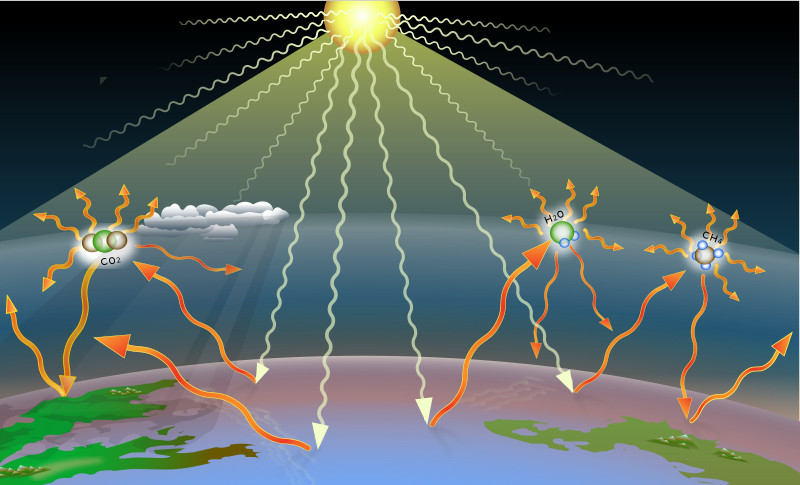
🔥 Main sources of rising CO₂: fossil fuel combustion + deforestation (removes carbon sinks, releases stored carbon)
Greenhouse effect diagram showing solar radiation and infrared trapping
CC BY-SA 4.0

The greenhouse effect: sunlight enters, Earth emits heat, greenhouse gases trap it. Wikimedia Commons · Pierre cb, CC BY-SA 4.0

Greenhouse Effect Process
Solar radiation enters atmosphere → Earth absorbs energy → Earth emits infrared heat → Greenhouse gases trap heat → Temperatures rise
Deforestation Double Effect
(1) Trees no longer remove CO₂ via photosynthesis. (2) Decomposing biomass releases stored carbon back into atmosphere.
Downstream Impacts
Agricultural stress · Groundwater depletion · Habitat loss · Stronger storms · Increased drought · Biodiversity loss
CO₂ Trend
Atmospheric CO₂ has risen from ~280 ppm pre-industrial to over 420 ppm today — the highest in 800,000 years.
💬 Why does rising atmospheric CO₂ serve as an indicator of unsustainable human activity?
💡 Answer tip: Explain the mechanism: fossil fuel combustion and deforestation release CO₂ faster than natural sinks (oceans, forests) can absorb it. CO₂ has risen from ~280 ppm pre-industrial to 420+ ppm today. This enhanced greenhouse effect traps more heat, driving unsustainable climate disruption.
✦ Feedback
Urban city skyline showing dense human settlement and infrastructure
⊕ Click to zoom
Urban growth — by 2050, over 9 billion people will place unprecedented pressure on Earth's resources. CC BY-SA · Wikimedia Commons
Indicator 4 — Human Population Growth

Human population growth has followed an exponential pattern — increasing at a constant percentage rate each year. This creates rapidly accelerating resource demand.

World population growth chart from 1800 to present
CC BY-SA

World human population from 1800 to present, showing exponential acceleration. Wikimedia Commons

Exponential Growth
Population doubles at increasingly short intervals. Each additional billion people is added faster than the last, putting compounding pressure on Earth's systems.
Resource Demands Created
Food · Freshwater · Timber · Energy · Land for housing and agriculture
Deforestation Link
More farmland + more lumber demand drives deforestation, which destroys habitat, reduces biodiversity, and releases carbon.
Groundwater Impact
Greater agricultural demand means more irrigation, rapidly depleting aquifers that recharge over thousands of years.
💬 How does exponential population growth challenge Earth's ability to remain sustainable?
💡 Answer tip: Describe how exponential growth means each additional billion people is added faster than the last, compounding demand for food, water, energy, and land. Mention at least one specific consequence — deforestation for farmland, aquifer depletion from irrigation, or habitat loss from urban expansion.
✦ Feedback
Deforestation around Pakke Tiger Reserve, India — land cleared for agriculture
⊕ Click to zoom
Deforestation near Pakke Tiger Reserve, India — forest loss accelerates as population grows. CC BY-SA · Wikimedia Commons
Indicator 5 — Resource Depletion

Resource depletion occurs when resources are consumed faster than they can regenerate. This directly violates the fundamental principle of sustainability.

Deforestation showing cleared forest
PD

Forest cleared for agriculture — one of the most visible forms of resource depletion. Wikimedia Commons · public domain

Examples of Depletion
Deforestation · Overfishing · Groundwater depletion (aquifer mining) · Fossil fuel extraction
Population-Deforestation Link
As human population increases, deforestation rates increase proportionally, confirming unsustainable resource extraction patterns.
Aquifer Depletion
Major aquifers (Ogallala, Arabian) are being drawn down at rates 10–100× faster than natural recharge. Once depleted, freshwater access disappears.
Fossil Fuels
Formed over millions of years; consumed in centuries. Classic example of resource use far exceeding regeneration rate.
💬 Choose one form of resource depletion and explain why it indicates unsustainable human activity.
💡 Answer tip: Name a specific example (deforestation, overfishing, aquifer depletion, or fossil fuels). Explain the rate imbalance — e.g., the Ogallala Aquifer is being drawn down 10–100× faster than it recharges. Connect this back to the core sustainability principle: Resource Use > Resource Regeneration = unsustainable.
✦ Feedback

Ecological Footprint Analysis

An ecological footprint measures how much biologically productive land and water a person needs to produce their resources and absorb their waste.

Student Ecological Footprints (global hectares / year)

Examine the data below for five students. Each category shows how much land and water is needed for that aspect of their lifestyle.

Scatter plot of ecological footprint versus human development index by country
CC

Countries plotted by ecological footprint vs. human welfare: few fall in the "sustainable and high well-being" quadrant. Wikimedia Commons

Student Food Transport Housing Goods & Services Total (gha)
Alejandra
0.8
0.3
0.5
0.4
2.0
Marcus
1.8
1.6
1.5
1.7
6.6
Priya
1.1
0.6
0.7
0.6
3.0
Chen Wei
0.6
0.2
0.4
0.3
1.5
Fatima
0.4
0.15
0.3
0.2
1.05
Earth's available biocapacity per person ≈ 1.6 gha. Any total above this means that person's lifestyle requires more than their "fair share" of Earth's resources.
Earth from space — the only biosphere humans have
⊕ Click to zoom
Earth from Apollo 17 — we share 1.6 gha of biocapacity per person. Marcus's 6.6 gha footprint would require ~4 Earths. NASA · Public domain
Q1 — Which student most likely lives in a highly developed country? Explain your reasoning using data from the table.
💡 Answer tip: Look at the totals column and individual categories. Highly developed countries (HDCs) like the USA have high transport, food, and goods footprints due to car dependency, meat-heavy diets, and high consumer spending. Identify the student with the highest total and reference at least two specific numbers from the table.
✦ Feedback
Q2 — Choose ONE category from the table (food, transport, housing, or goods & services). Explain how that category functions as an environmental indicator and what high values suggest about sustainability.
💡 Answer tip: Choose one and explain the chain of environmental impact. Example: Transport → fossil fuel combustion → CO₂ emissions → climate change → unsustainable. Or Food → land cleared for agriculture → deforestation → habitat loss + carbon release. High values mean more land, water, and energy are required — often exceeding regeneration rates.
✦ Feedback
Q3 — Marcus's footprint is 6.6 gha. If everyone lived like Marcus, how many Earths would be needed? What does this tell you about sustainability? (Hint: divide 6.6 by 1.6)
💡 Answer tip: 6.6 ÷ 1.6 = approximately 4.1 Earths. Show your calculation, then explain what this means: Earth only has 1.6 gha of biocapacity per person, so Marcus's lifestyle requires 4× more than Earth can provide. If everyone lived this way, we would need 4 planets — which we don't have. This is the definition of unsustainability.
✦ Feedback

Graded Exit Ticket

Demonstrate your understanding with a short free-response answer. Your response will be scored on AP rubric criteria.

▶ AP Free Response Question

Explain how ONE environmental indicator demonstrates that human activities are not sustainable. In your response, identify the indicator, describe the trend or data associated with it, and explain the mechanism by which human activity is causing the unsustainable condition.

💡 AP Rubric — 3 things to include:
(1) Identify a specific environmental indicator (e.g., rising atmospheric CO₂, declining biodiversity, declining grain production per capita, groundwater depletion, or population growth).
(2) Describe the trend with at least one specific data point or measurable change.
(3) Explain the mechanism — what human activity causes this, and why it means we are consuming resources faster than they regenerate.
Grading your response…

— / 2
—
—

Nice work on Topic 5.12

🌿

Sustainability — Complete

You've explored the science of sustainability through concept building, simulation, data analysis, and an AP-style graded response.

—
Exit Ticket Score
—
MSY Total Harvested
5
Indicators Reviewed

Review the Key AP Concepts before your exam: Sustainability, MSY, Environmental Indicators, Ecological Footprint, Exponential Growth, Greenhouse Effect, Biodiversity Loss, Resource Depletion.

📤 Submit Your Responses

Click below to send all of your answers to your teacher's gradebook. You only need to do this once.

Sending responses…

⚠ If you see an error, let your teacher know — your written answers are still saved in this window.