AP Environmental Science · Topic 5.16
Aquaculture
Read · Think · Write · Reflect
Intro
Reading
Write
Feedback
Download
🐟 What is Aquaculture?
Aquaculture — the practice of raising aquatic species (fish, shellfish, seaweed) in controlled enclosures for use as food. Sometimes called fish farming when the species is a fish.
Think of it as agriculture — but underwater. Instead of growing crops in a field or raising cattle on a ranch, aquaculture raises species in cages or enclosures in water.
Fish Farming
Aquatic Species
Enclosures / Cages
Seaweed
Shellfish
🎯 Learning Objectives
By the end of this activity you'll be able to:
- GOAL Describe at least two environmental benefits of aquaculture compared to wild-catch fishing.
- GOAL Explain at least two environmental drawbacks or unintended consequences of aquaculture.
- GOAL Write a complete, evidence-based response comparing aquaculture to net fishing (CER style).
✅ Benefits — Flip Each Card
Click a card to reveal the explanation. Read all three before moving on.
0 / 3 revealed
⛽
Low Space & Fuel Use
tap to reveal
BENEFIT
Aquaculture uses far less water space and fuel compared to deep-sea fishing. Wild-catch fishing requires large boats traveling long distances; aquaculture farms stay in one place.
🐠
Prevents Fishery Collapse
tap to reveal
BENEFIT
Fishery collapse = a 90%+ drop in a wild fish population. Aquaculture breeds its own fish in controlled conditions, so it doesn't draw down wild stocks. No wild fishing → no collapse risk from that harvest.
🌿
No Land Use
tap to reveal
BENEFIT
Raising beef, pork, or chicken requires enormous amounts of land for grazing and feed crops. Aquaculture uses water space instead — making it much more land-efficient as a protein source.
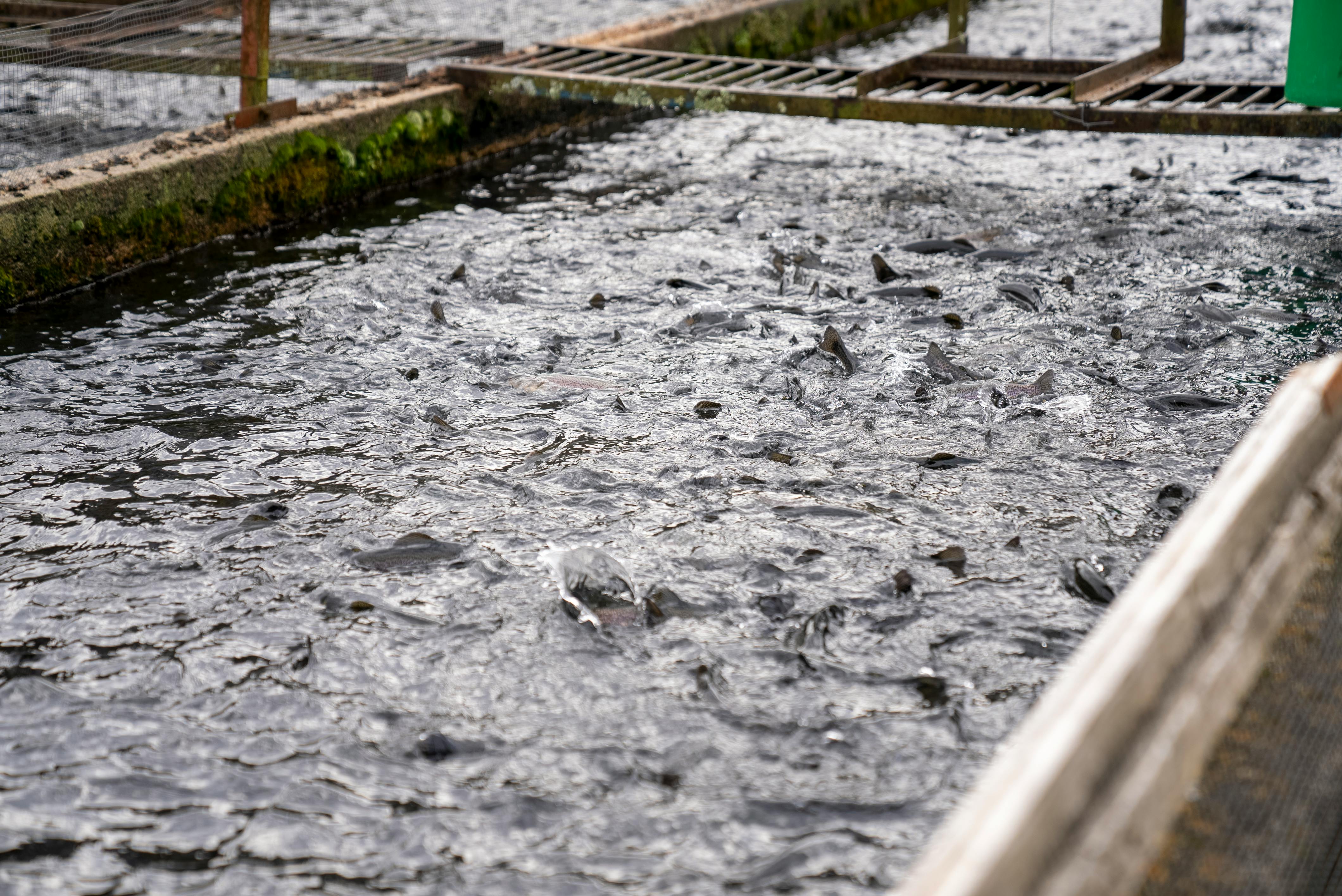
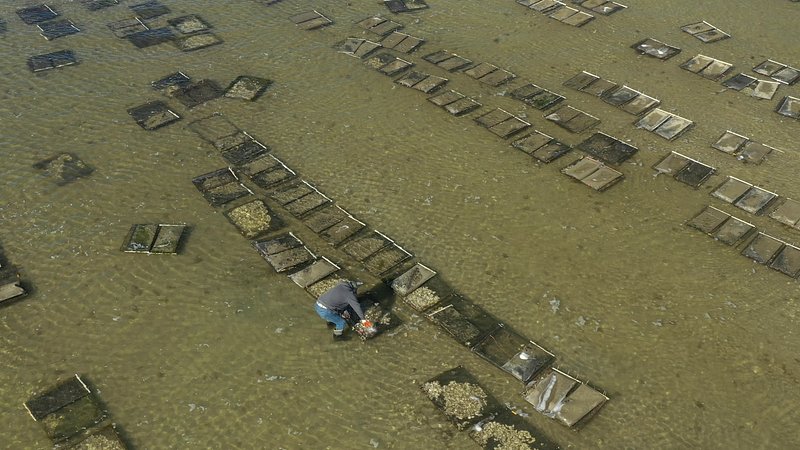
📸 What Does Aquaculture Look Like?
Click any photo to zoom in and read the connection to what you just learned.



⚠️ Drawbacks — Flip Each Card
Four environmental problems to know. Click each one.
0 / 4 revealed
💩
Waste Concentration
tap to reveal
DRAWBACK
Dense fish populations = huge amounts of waste in one area. This causes eutrophication (excess nitrogen → algae blooms → oxygen crash) and can spread E. coli into the water.
🦠
Disease Outbreak
tap to reveal
DRAWBACK
High density = disease spreads fast. Since the cages sit in open water, pathogens can flow out and infect wild fish populations nearby — spreading disease far beyond the farm.
🧬
Invasive / GMO Escape
tap to reveal
DRAWBACK
Farmed species are often non-native or genetically modified. If they escape, they may breed with wild fish (altering gene pools) or become invasive — outcompeting native species for resources.
💊
Antibiotic Contamination
tap to reveal
DRAWBACK
Antibiotics are necessary to control disease in packed cages. They pass through fish and enter the water as waste — causing endocrine disruption in wildlife and contributing to antibiotic resistance.
🔑 Key Vocabulary — Tap to Define
These terms show up on the AP exam. Tap each one to reveal its definition.
Eutrophication ▶
When excess nutrients (especially nitrogen from fish waste) enter a body of water, triggering algae overgrowth. When the algae dies, decomposition consumes oxygen — creating dead zones where fish can't survive.
Fishery Collapse ▶
A 90% or greater decline in a wild fish population, usually caused by overfishing. Once collapsed, stocks can take decades to recover — or may never recover at all.
Endocrine Disruption ▶
When chemical contaminants (like antibiotics or hormones) interfere with an animal's hormone system. This can affect reproduction, development, and behavior in fish and other aquatic organisms.
CAFO ▶
Concentrated Animal Feeding Operation — a factory farm where animals are raised in very high densities. Aquaculture pens share the same core problem: concentrated waste and disease risk.
Invasive Species ▶
A non-native species introduced to an ecosystem where it has no natural predators. It can outcompete native species, disrupt food webs, and cause long-term ecological damage.
Aquaculture ▶
The controlled farming of aquatic organisms — fish, shellfish, or seaweed — in cages or enclosures for human use. Think: agriculture, but underwater.
0 / 6 defined
🗂️ Sort It Out
Drag each item below into the correct zone — Benefit or Drawback. You need to get them all right to continue to the writing section.
✅ Benefit
⚠️ Drawback
Question 1 of 3
In your own words, explain what aquaculture is and why it is sometimes called "fish farming."
💡 Try not to look back at the reading. Use what you remember!
0 characters
Question 2 of 3
Identify one advantage that aquaculture has over net fishing (wild-catch). Explain why this is an environmental benefit.
💡 Think about what happens to wild fish populations when we rely on net fishing.
0 characters
Question 3 of 3 — FRQ Practice
Describe one environmental consequence of aquaculture. In your response, explain the cause of the problem and how it impacts the surrounding environment.
💡 Pick any one drawback you read about. Use specific vocabulary like eutrophication, endocrine disruption, or invasive species if relevant.
0 characters
Question 1 — What is Aquaculture?
Your response:
Analyzing your response…
AI Feedback
Question 2 — One Advantage
Your response:
Analyzing your response…
AI Feedback
Question 3 — Environmental Consequence (FRQ)
Your response:
Analyzing your response…
AI Feedback
Activity Complete!
Topic 5.16 — Aquaculture
📋 Your Work Summary
| Q1 Response | |
| Q2 Response | |
| Q3 Response | |
| AI Feedback (Q1) | |
| AI Feedback (Q2) | |
| AI Feedback (Q3) |
Save this file and submit it to your teacher.
✕ Close
Photo Notes