The Problem: Why Clear-Cutting Harms Forests
Clear-Cutting: Short-Term Profit, Long-Term Damage
Before learning sustainable practices, we need to understand what we're trying to fix.
❌ What Clear-Cutting Does

Clear-cutting removes every single tree from an area at once. It might seem efficient, but it starts a cascade of environmental damage:
- Soil erosion — tree roots anchor soil. Without them, rain washes soil downhill, especially on slopes.
- Turbid streams — that eroded soil ends up in nearby waterways, clouding them and suffocating organisms that need clear water.
- Habitat destruction — animals that live in, feed on, or move through the forest are left with nothing. Local populations can collapse.
- Soil compaction — large logging machines are extremely heavy. Their repeated passes compact soil, increase runoff, and prevent regrowth.
- Loss of biodiversity — when the forest disappears, all species that depended on it may disappear too.
✅ What a Healthy Forest Provides
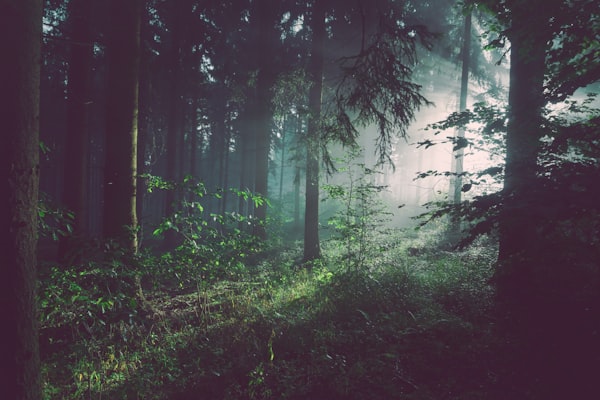
A standing forest does far more than produce lumber. It provides ecosystem services that benefit everyone:
- Carbon sequestration — trees absorb CO₂ during photosynthesis, helping slow climate change.
- Watershed protection — roots absorb rainfall, filter it, and release it slowly into streams, preventing floods and keeping water clean.
- Wildlife habitat — forests support thousands of species of birds, mammals, insects, and plants.
- Long-term timber supply — clear-cutting can maximize profits for a decade or two, but ecologically sustainable forestry lets us harvest timber for centuries.
Sustainable Practices — Read, then explain in your own words.
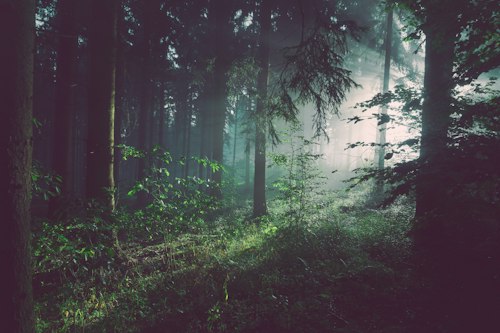
Selective Cutting
Instead of clear-cutting, selective cutting removes only the oldest or largest trees while leaving the rest of the forest intact. This is one of the most critical aspects of sustainable forestry.
Because most trees stay standing, the forest floor remains covered and protected. Roots keep anchoring soil, preventing erosion. Streams stay clear instead of becoming turbid (cloudy) from soil runoff. Wildlife habitat is preserved — animals still have trees for shelter, food, and movement through the landscape.
Selective cutting can also be used specifically to remove diseased trees. Once a tree is infected by fungus, bacteria, or a pest, it becomes a breeding ground — and the disease can spread to healthy neighbors. Removing infected trees early is like quarantining a sick animal to protect the rest of the herd.

Strip Cutting
Strip cutting harvests trees in alternating bands — one strip is cut, the next is left standing, the next is cut, and so on — creating a patchwork pattern across the landscape.
The standing strips act as buffers. Their roots hold soil in place, preventing erosion and keeping sediment out of streams. Animals can still move through the forested corridors even while parts of the forest are being harvested. The remaining trees also drop seeds that help cut strips regenerate naturally over time.
Compared to clear-cutting an entire hillside, strip cutting dramatically reduces how much bare soil is exposed at any one time. Once a harvested strip regrows, the adjacent standing strip can be cut — creating a rotating, sustainable cycle of harvest and recovery.
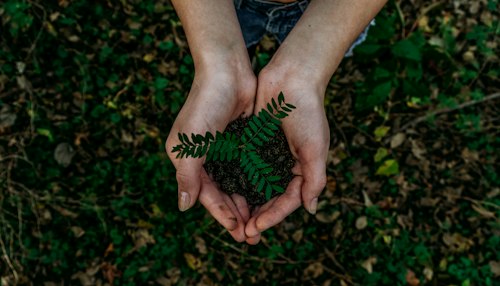
Reforestation
Reforestation is the act of replanting trees in deforested areas — ideally the same native species that were originally there, not just any fast-growing tree.
Species choice matters because local wildlife evolved alongside specific trees. Replanting the right species restores biodiversity, brings back animal habitats, and re-establishes a functional ecosystem. A monoculture plantation of a single non-native species doesn't do that.
Reforestation also helps address climate change: growing trees absorb CO₂ from the atmosphere through photosynthesis, sequestering carbon that would otherwise contribute to warming. A famous example — Brazilian photographers Sebastião and Lélia Salgado replanted over 2 million trees on their degraded land over 18 years, fully restoring the rainforest ecosystem.
A related practice is using pack animals like horses instead of heavy machinery when logging. Large machines cause severe soil compaction — making soil dense, increasing runoff, and making regrowth much harder. Horse logging minimizes that compaction, giving reforestation a much better chance to succeed.
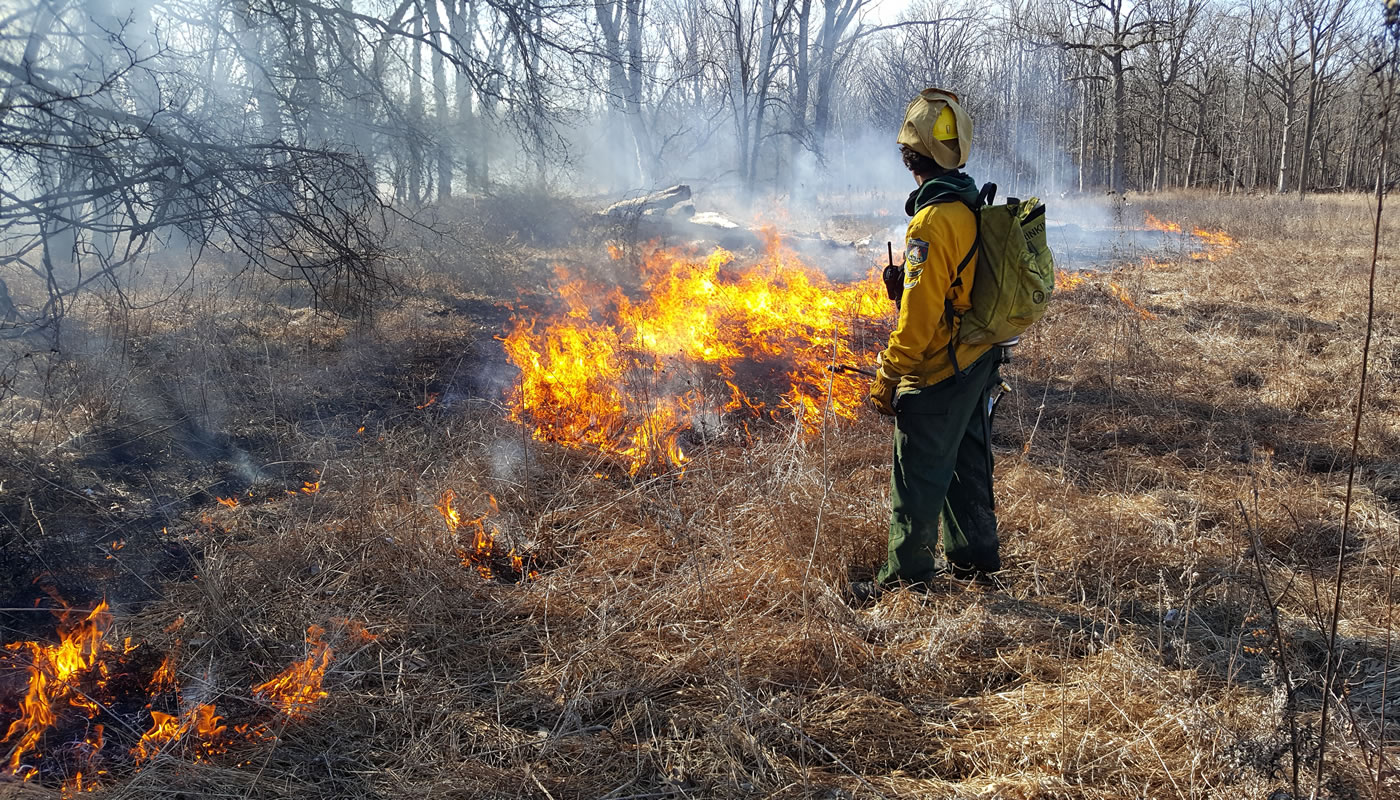
Prescribed Burns
For decades, the standard U.S. approach was fire suppression — putting out every wildfire as quickly as possible. It seems protective, but it creates a dangerous problem over time.
Natural fires burn up dead biomass — dry grasses, fallen branches, standing dead trees. When every fire is suppressed, this material keeps piling up on the forest floor year after year. That buildup causes three major problems:
- Massive fuel load — the accumulated dry material becomes fuel. When a fire eventually does start, it burns far hotter and spreads far faster. California's catastrophic wildfires are partly a result of a century of suppression.
- Nutrient lock-up — nutrients trapped in dead plant material can't return to the soil. They're unavailable for new plant growth.
- Disease and pest breeding grounds — dead trees can't fight off infection and become nurseries for the pests and diseases that then spread to living trees.
The solution is prescribed burns — intentionally setting small, controlled fires under safe conditions. Workers dig fire lines (firebreaks), set the fire upstream from a river so wind can't carry it beyond the target area, and monitor it closely. The burn removes accumulated dead material, returns nutrients to the soil, eliminates pest and disease habitat, and promotes healthy new growth. Living, green plants don't burn as easily — so prescribed burns actually help prevent worse fires in the future.
Recycling Wood
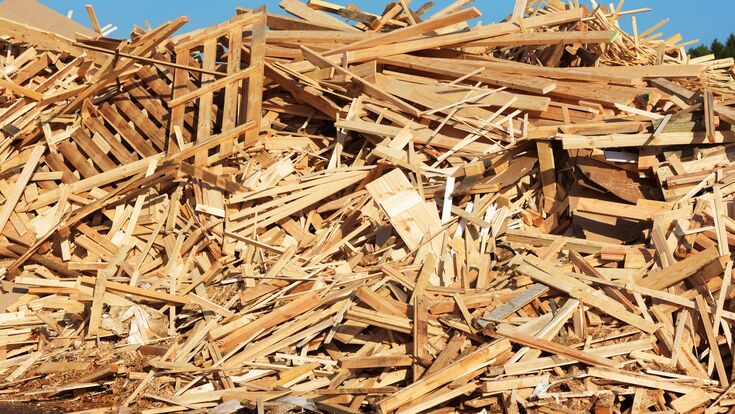
One of the simplest ways to reduce pressure on forests is to use less new wood. If demand for freshly cut timber goes down, fewer trees need to be logged in the first place.
This can happen in several ways:
- Repurposing — old shipping pallets turned into furniture, barn wood made into flooring, salvaged lumber reused in new construction.
- Recycled wood products — engineered boards made from compressed wood scraps and sawdust that would otherwise go to waste.
- Wood chipping — grinding old wood into mulch for use in gardens or on agricultural fields, returning organic matter to the soil instead of sending it to a landfill.
Every piece of recycled or reused wood is one fewer tree that needs to be cut. This directly reduces demand for new timber harvesting — and less logging means less deforestation, less soil erosion, less habitat destruction, and less biodiversity loss.
Your Summary Table
Fills in automatically as you complete each section above.
| Practice | Your Response | Grade | Tries |
|---|---|---|---|
| Selective cutting | Complete section 1 ↑ | — | — |
| Strip cutting | Complete section 2 ↑ | — | — |
| Reforestation | Complete section 3 ↑ | — | — |
| Prescribed burns | Complete section 4 ↑ | — | — |
| Recycling wood | Complete section 5 ↑ | — | — |
Prescribed Burns — Free Response
📬 Submit Your Work
Enter your name and click Submit — your responses, grades, AI feedback, and attempt counts will be sent to Mr. Sajdak. You can submit at any point to save your progress.